


Screenshot
Welcome to our newest members: Stacy Peters, Pegi Bennington, Rhonda Fullawka, and Bruce Sass! Be sure to say hello and make them feel welcome on the courts.
Valentine’s Day Mixer
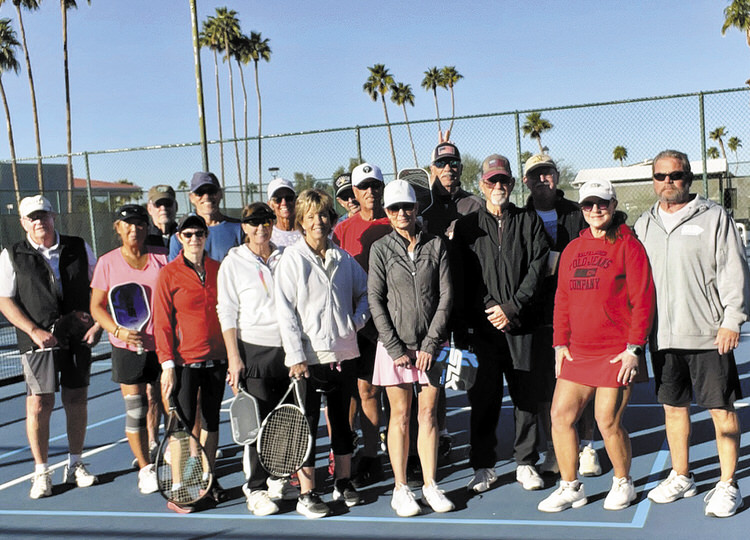
A great time was had by all at the Valentine’s Day Tennis and Pickleball Mixer. Thanks to everyone who joined the fun!
New Schedule Coming
A new pickleball schedule is out for April. Sign up on TeamReach if you want to enjoy club play. Open play start times begin at 8 a.m. instead of 9 a.m. See the glass case or TeamReach for all available club events.
One-Handed Backhand or Two?
Knowing when to switch makes the difference.
If you’ve been playing pickleball for a while, you’ve likely noticed this: Your forehand feels solid, and your one-handed backhand works until the game speeds up.
Suddenly, there are jammed speed-ups, fast kitchen exchanges, and body shots that make your paddle feel late or unstable. That’s usually when players start thinking about the two-handed backhand—not because the one-hander is wrong, but because pressure exposes its limits.
“You don’t replace your one-handed backhand. You add the two-hander as a second gear.”
The two-handed backhand isn’t about power. Its real value is control. The second hand provides stability against pace, helps keep the paddle face steady, and allows you to redirect the ball instead of just reacting.
The Simple Rule to Remember
• If you have time to move, use two hands.
• If the ball is already on you, use one hand.
That single decision clears up most confusion.
What Each Backhand Does Best
The one-handed backhand is your emergency option. It’s best for quick reactions—body speed-ups, late blocks, and fast hands at the kitchen. Think compact, short, and defensive.
The two-handed backhand is your control option. Use it when you have even half a step to get set and the ball is slightly away from your body. It’s ideal for counters, pulling wide balls back into the court, and adding consistency under pressure.
Many players also find the two-hander especially helpful for dinks and resets where paddle stability matters most.
Backhand Quick Guide
One Hand:
• Jammed balls
• Late reactions
• Fast blocks
Two Hands:
• Time to set up
• Ball away from body
• Counters and control
Bottom line:
One hand keeps you alive.
Two hands help you take control.