


 Karen Volk
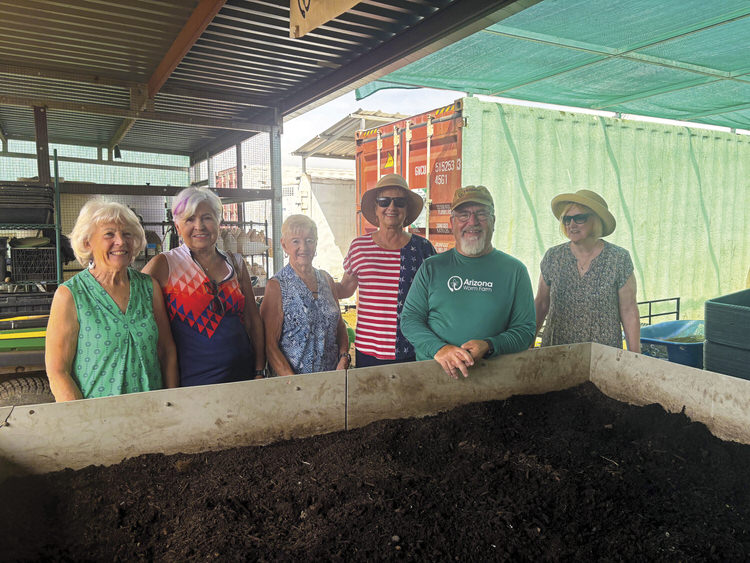
Five SunBird Garden Club members were able to take part in the Arizona Worm Farm Field Trip. It was a comprehensive tour with hands–on opportunities, behind the scenes operations, and extensive information showcasing the future for agriculture sustainability. Zach Brooks is committed to reducing the amount of oil-based and chemical-based fertilizers that are used for agriculture. Worm castings are a prized part of soil building.
Zach Brooks went back to ASU to get a second master’s in agricultural sustainability and decided to start an off the grid, zero-waste farm. He had spent 30 years as a consultant and partner at a global consulting firm. He originally planned to sell fruits and vegetables, but worms were an integral part of the zero-waste strategy because they could convert garbage into fertilizer and healthy soil and provide a protein source for the hens.
It turns out that worms, worm castings and compost, which are made on this farm, are a great revenue source. The worm farm is on 10 acres with an ultimate goal to feed and clothe 10 families using just sunshine, rainwater, and other people’s garbage. Worms are a critical element to making that happen.
There are 19 employees on the farm. There are separate teams responsible for breeding worms, making vermicompost and castings, growing fruits and vegetables, and making compost (regular hot compost).
The farm takes in about 320 cubic yards of waste every week (vegetable and fruit waste, manures and ground landscape waste) and composts it, feeding it to the worms and black soldier fly larvae and chickens.
The farm uses red wiggler worms because they are hardy, easy to breed, and live well in the Arizona temperature extremes. Worms need food weekly. They are fed pre-composted food waste and horse manure. The byproduct of worms—either live worms or worm castings—is lots of good microbes. Microbes help the plants extend their roots to make better use of water and nutrition and store water for later use. The difference in the quality of soil is tangible. The farmland is richer and able to retain water much better than other land in the area. This means less water is required to maintain operations, conserving resources.